
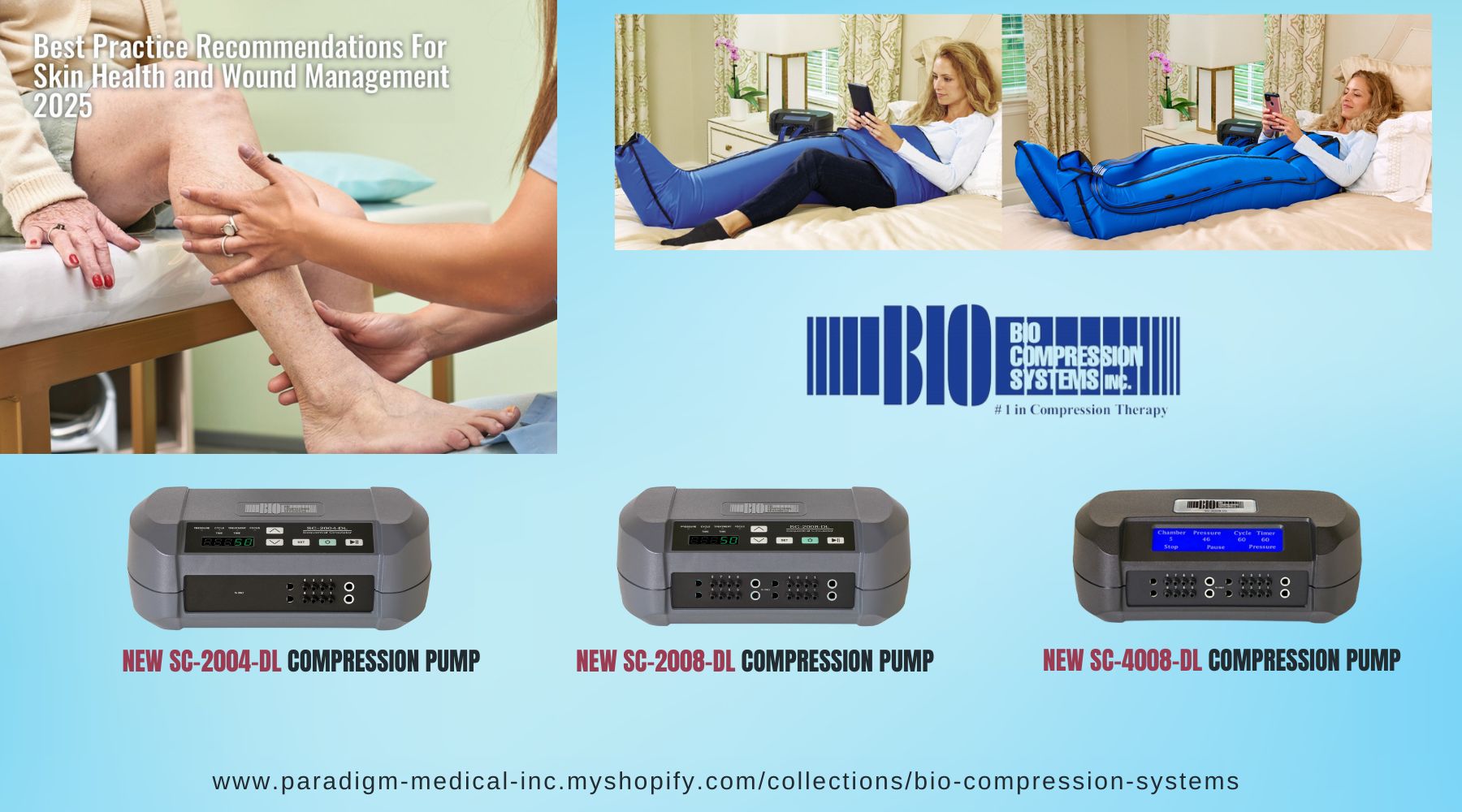
The Wounds Canada 2025 Best Practice Recommendations for wound management include a review of Intermittent Pneumatic Compression (IPC) devices for Venous Leg Ulcers (VLUs).
Review the report HERE

The review confirms Intermittent Pneumatic Compression (IPCs) pumps' established role, noting that it may increase healing compared with no compression. They concluded that IPC in the home setting is anticipated to improve patient involvement, concordance, patient outcomes and reduce risk to staff applying conventional compression bandaging systems, particularly for obese patients with limited mobility.
~~~~~~~~~~~~~~~~~~~~~~~~~~~~~~~~~~~~~~~~~~~~~~~~~~~~~~~
The market for Intermittent Compression Pumps (also known as Intermittent Pneumatic Compression or IPC devices, or lymphedema pumps) is a growing segment within the broader Canadian Compression Therapy Market.
The overall Canadian Compression Therapy Market was valued at $304 million in 2022 and is projected to reach $470 million by 2030, exhibiting a Compound Annual Growth Rate (CAGR) of 5.6%. Intermittent compression pumps are a key component of this growth.

Key Market Drivers
The growth in the Canadian market is fueled by a confluence of factors, many of which align with global trends:
-
Rising Prevalence of Chronic Diseases: The increasing incidence of conditions requiring therapeutic and preventative compression is the primary driver. This includes:
- Lymphedema and Chronic Edema: As an estimated 1.25 million Canadians are affected, the demand for at-home management tools like pumps is significant.
- Chronic Venous Insufficiency (CVI) and Varicose Veins: A high percentage of the Canadian population suffers from venous disorders.
- Deep Vein Thrombosis (DVT) Prevention: IPC devices are a standard part of VTE (Venous Thromboembolism) prophylaxis, especially in post-operative and hospital settings.
- Aging Population: Canada's growing elderly population is more susceptible to vascular and circulatory disorders, leading to increased demand for long-term and home-based compression solutions.
-
Shift to Home Healthcare: There is a significant and increasing preference for managing chronic conditions at home to reduce healthcare costs and improve patient quality of life. Manufacturers are responding by developing more portable, user-friendly, and lightweight devices suited for the home environment.